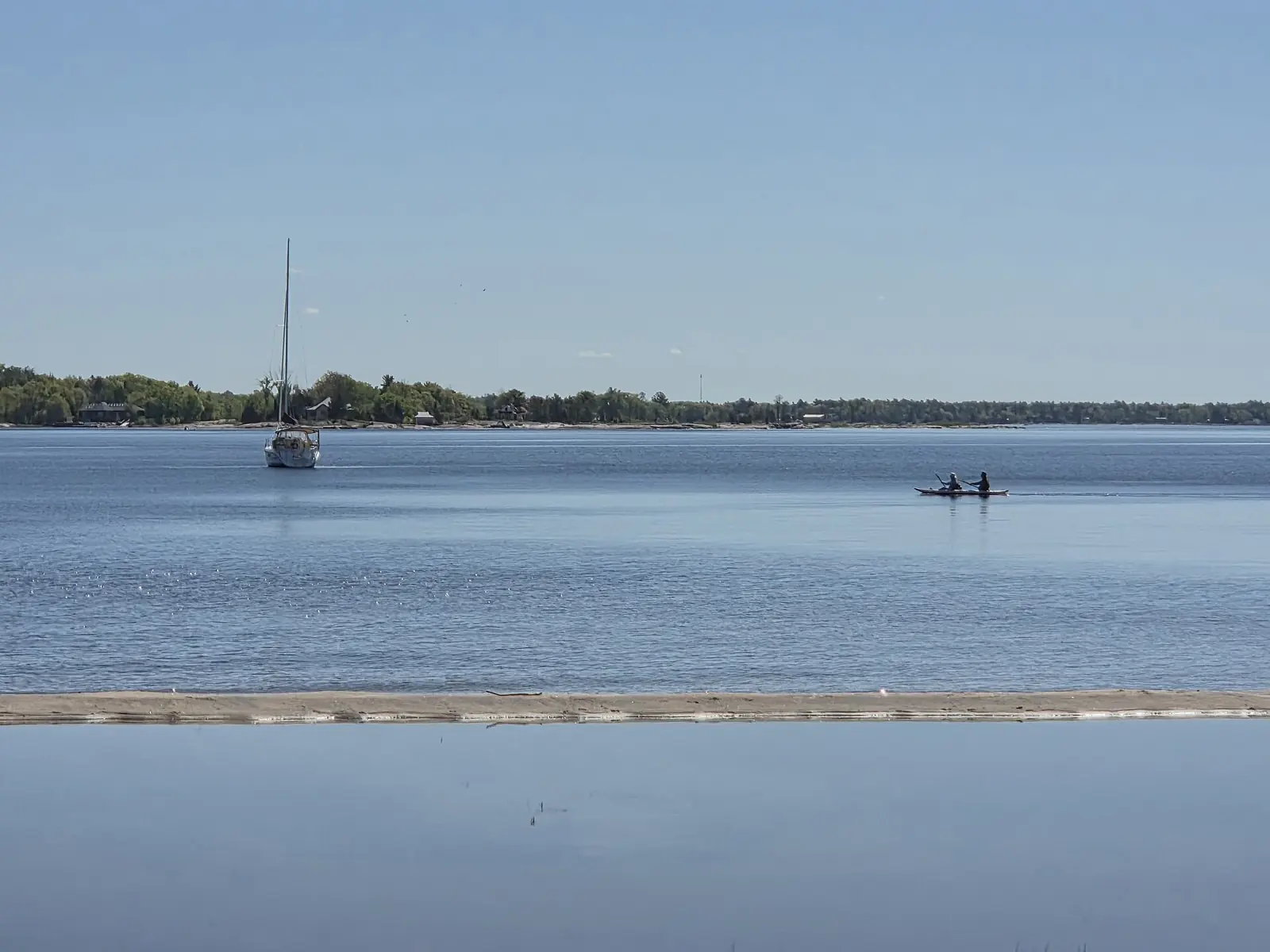
The five lakes do not share a single season, and treating them as one region in one month is the most common planning mistake. Lake Erie and Lake Ontario warm first and stay warm longest. Lake Superior stays cold, sometimes painfully so, well into summer. Everything in between follows its own logic.
Spring: migration and mud
Spring belongs to the shallower lakes. Point Pelee, on the Lake Erie peninsula, is one of the most important bird migration points in North America, and the season there is short and intense. Expect cold water, closed facilities and the best birding of the year. Trails on the northern lakes are often still wet or snowbound into May.
Summer: the busy season
June through August is when everything runs, and when the shoreline towns are at their best and their fullest. Book accommodation early, particularly in Georgian Bay, Door County and the Michigan dunes. Two things to know:
- Lake Superior stays cold. Swimming is brief and bracing even in August.
- The western basin of Lake Erie can bloom. Late-summer algae and beach closures are a recurring issue; check local beach status rather than assuming.
Autumn: the best light
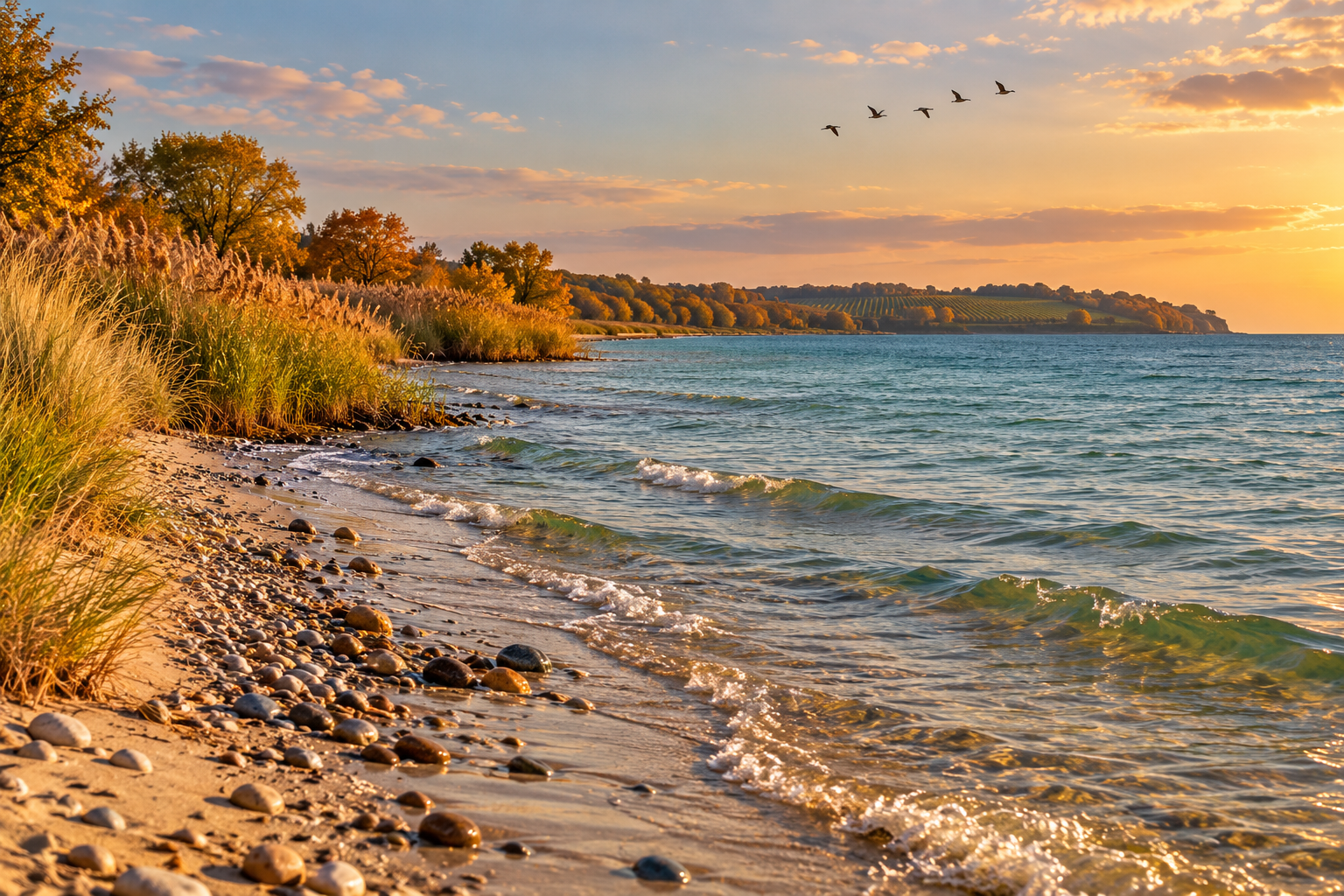
September and early October are the strongest weeks for a trip on almost any of the lakes. Water is still warm enough to swim, the crowds drop sharply after Labour Day, and the light is better for photography. Some boat operators and seasonal parks shorten their season as the month turns, so check opening dates before you build a trip around a specific cruise.
If you can only pick one window for a first trip across the region, pick late September.
Winter: fewer places, more character
Winter closes a lot and opens a different region. Ice fishing, snowshoeing and dark-sky viewing take over, while many lakeside businesses shut entirely until spring. Harbours freeze at different rates and ice conditions are never safe to assume. If you are travelling in winter, choose one community and stay put rather than trying to cover distance.